Transferring the outline
After the arching on the top plate has been finished, the shape of the F holes should be transferred onto the surface. The shape of the F holes in our example is a slightly modified shape of the Messiah violin.
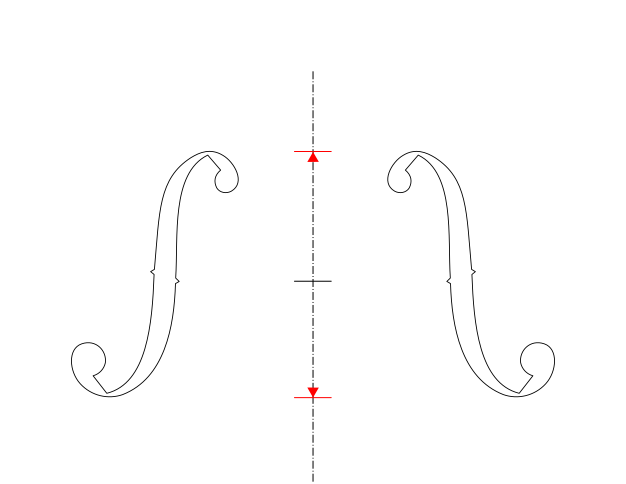
- Print out or otherwise transfer the outline of the F holes on a sheet of plastic foil or paper. See Fig. 1. for the outline for the violin we are building. On the physical copy, check the height between the red arrows is about 69.5 mm.
- On the printout, check that the physical measurements are correct. Ie. 42 mm distance between the upper eyes.
- To finish the template, take a sharp knife and carefully cut out the outlines, including the nicks.
- Lightly mark the stop length on the top of the violin plate, for our violin it is 196 mm. See "b" in Fig. 2 for its location.
- Align the centerline of the new plastic template with the centerline of the top plate and align the inner nicks of the F holes with the stop length mark. See that the position is correct in regard to all measurements in Fig. 2. "a" is the distance of 42 mm, "b" is the stop length of 195-6 mm, "c" is the distance of 11 mm and "d" means the top of the lower eye should be level with the purfling.
- Fasten the template in this position, with two pieces of a sticking tape, up and down, but only lightly so that you don't tear out wood fibers when removing the template.
- Using a sharp pencil, transfer the shape of both f-holes onto the surface of the wooden plate. When finished, remove the template.
Fluting the f-hole wings
In order to make the f-holes look more integral to the arching, the lower wings are fluted. Note that the fluting still gradually rises to the edge of the wing. See the red area in Fig. 2 for reference. The red color intensity denotes (approximately) the volume of material removed. In the area of the wing tips, you may cut as deep as 1.5 mm, depending on how "intensive" you want your fluting to be.
- Use a shallow round gouge, pare away the wood in the direction away from the tip of the wing.
- Smooth and blend the newly created surface with the rest of the arching using your scraper.
- Repeat on the other f-hole.
- Put the template in its proper place again and remark the parts of f-holes which got removed during the fluting.
1
2

ʕʘ̅͜ʘ̅ʔ